


 Back
Essential and Uncomplicated
Vegan Food for Dogs and Cats: A Practical and Conscious Guide
Everything you need to know to feed your pet healthily, ethically and sustainably

Silvia Ribeiro
#essentialanduncomplicated
On 01/05/2025 at 11:23 pm - Updated on 28/05/2025 at 10:24 pm
Share:


With the growing interest in plant-based diets not only among humans but also for our animal companions, there is a need for clear, reliable, and safe information about this type of diet. With this in mind, we have prepared this special content based on the guide " Guidebook for Plant-Based Dogs & Cats," a comprehensive resource that brings together scientific studies, nutritional guidelines, recipes, and practical tips for those who wish to offer a balanced vegan diet to dogs (and also cats, with due care).
This article is a detailed summary of the guide, adapted in an accessible and informative way, to help guardians understand the benefits, the necessary care and how to begin this transition with responsibility and care.
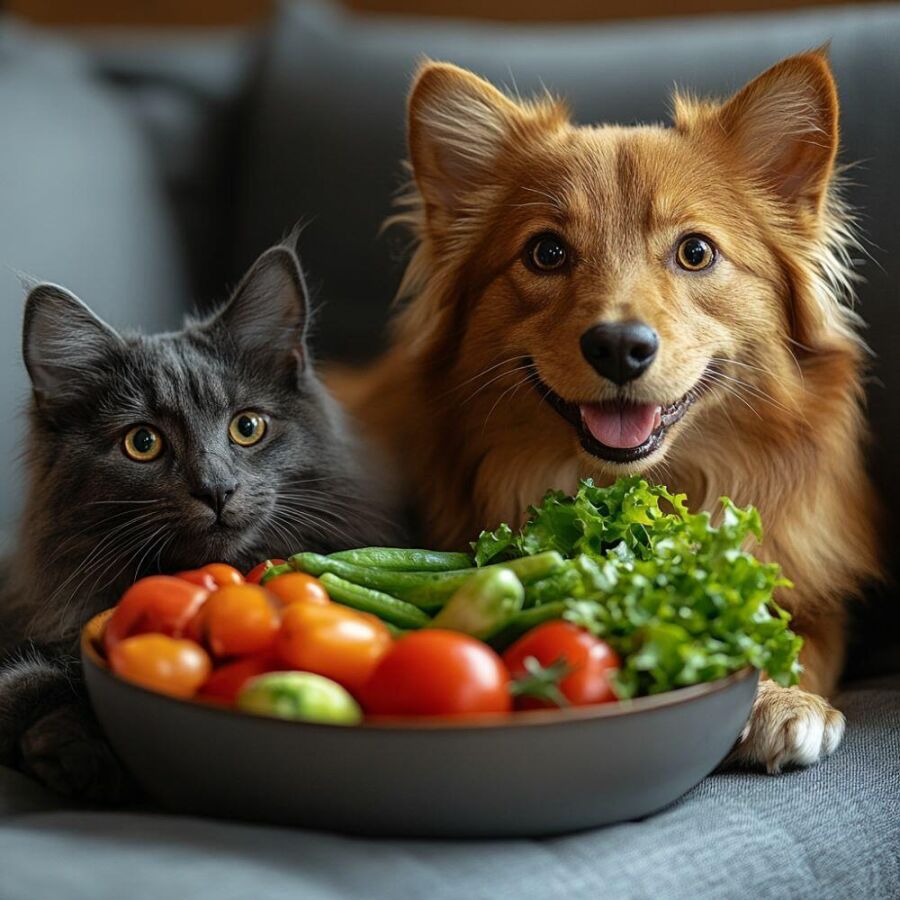
🐾 Guidebook for Plant-Based Dogs & Cats
1. Why Vegan Food for Dogs and Cats?
🩺 Animal Health
Vegan diets, when well formulated, are safe and may even be better for dogs and cats in several health aspects, such as:
🔸 Weight control
🔸 Improves digestive health
🔸 Lower incidence of food allergies
🔸 Potentially increased longevity
Sources:
(1) Knight, A., Huang, E., Rai, N., & Brown, H. (2022). Vegan versus meat-based dog food: Guardian-re
ported indicators of health.
https://doi.org/10.1371/journal.pone.0265662
(2) Domínguez-Oliva A, Mota-Rojas D, Semendric I, Whittaker AL. The Impact of Vegan Diets on Indicators
of Health in Dogs and Cats: A Systematic Review. Veterinary Sciences. 2023.
https://doi.org/10.3390/vetsci10010052
(3) Axelsson, E., Ratnakumar, A., Arendt, M.L. et al. The genomic signature of dog domestication reveals
adaptation to a starch-rich diet.
https://doi.org/10.1038/nature11837
(4) Mueller, R. S., Olivry, T., & Prélaud, P. (2016). Critically appraised topic on adverse food reactions of
companion animals (2): Common food allergen sources in dogs and cats.
https://doi.org/10.1186/s12917-016-0633-8
(5) American Veterinary Medicine Association. Policy: Raw or undercooked animal-source protein in cat
and dog diets. (2023)
https://www.avma.org/resources-tools/avma-policies/raw-or-undercooked-animal-source-protein-cat-and-dog-diets
Additionally, genetic studies show that dogs have evolved to digest starchy foods (carbohydrates), which reinforces the viability of plant-based diets.

🌎 Environmental Impact
The production of conventional pet food:
🔸 Significantly increases greenhouse gas emissions
🔸 Contributes to environmental degradation and overuse of resources such as land and water
The "ecological footprint" of dogs and cats based on animal-based food is equivalent to the emission of millions of tons of CO₂ annually
Sources:
(6) Okin, G. S. (2017). Environmental impacts of food consumption by dogs and cats.
https://doi.org/10.1371/journal.pone.0181301
(7) Alexander, P., Berri, A., Moran, D., Reay, D., & Rounsevell, M. D. (2020). The global environmental
paw print of pet food. Global Environmental Change.
https://doi.org/10.1016/j.gloenvcha.2020.102153
(8) Yavor KM, Lehmann A, Finkbeiner M. Environmental Impacts of a Pet Dog: An LCA Case Study.
Sustainability. 2020
https://doi.org/10.3390/su12083394

🐾 Animal Ethics
🔸 The feed industry uses animal by-products that often come from cruel practices.
There are also reports of slave labor in the supply chain of ingredients for conventional feed (such as in the fishing sector).
Sources:
(9) DL Meeker, JL Meisinger, COMPANION ANIMALS SYMPOSIUM: Rendered ingredients signi cantly
influence sustainability, quality, and safety of pet food, Journal of Animal Science, Volume 93, Issue 3,
March 2015.
https://doi.org/10.2527/jas.2014-8524
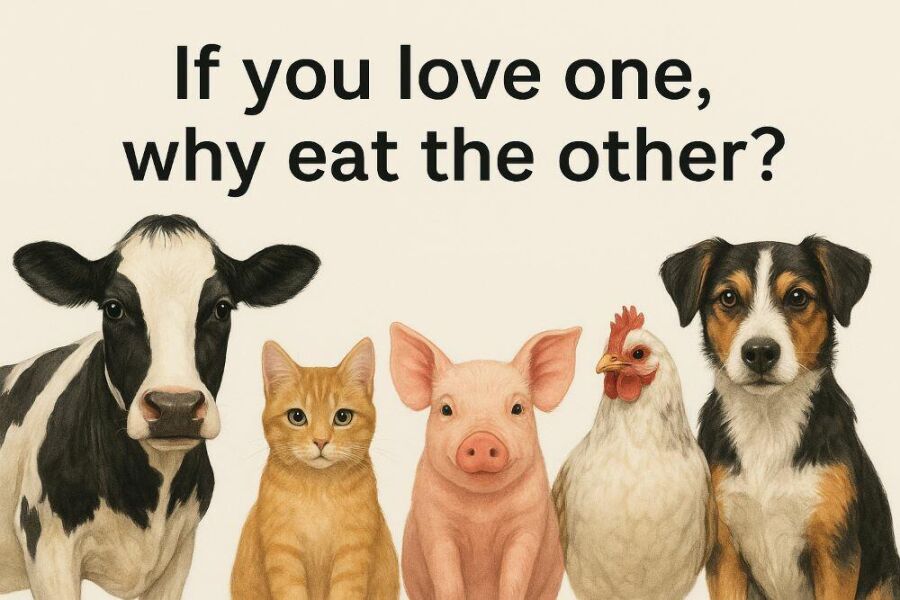
2. Commercial Plant-Based Feed Options
Prefer brands that:
🔸 Use recognizable ingredients (e.g. brown rice, peas, lentils).
🔸 Are free from preservatives, dyes and artificial additives.
🔸 Whether they are labeled as natural or clean label.
Tip: Highly processed foods, even vegan ones, should be minimized. The more natural, the better for your pet's health.
3. Cooking Vegan Food at Home
🔸 It is possible to prepare safe and complete homemade meals for dogs and cats.
🔸 And, if necessary, add essential supplements. Always consult a veterinarian to find out which supplement is ideal for your pet.
🔸 DO NOT add extra supplements to commercially prepared foods, as this can cause an excess of nutrients and be harmful.
Recipe examples from the guide:
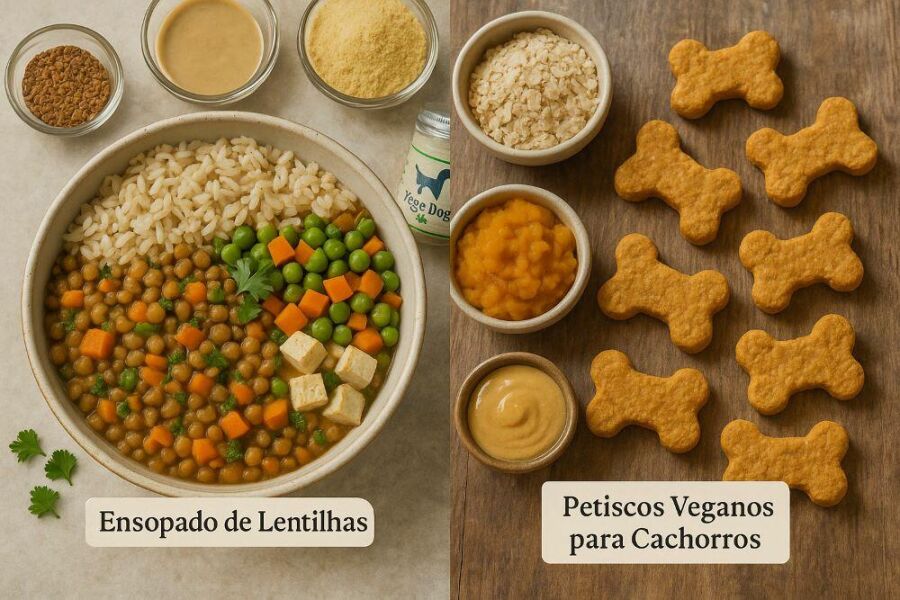
🥣 1. Lentil Stew for Dogs
Ingredients:
- 2 cups dried lentils
- 6 cups of water
- 1 cup uncooked brown rice
- 3-4 cups chopped fresh vegetables (e.g. carrots, squash, peas, spinach)
- 450 g super firm tofu
- 2 tablespoons nutritional yeast
- 2 tablespoons ground flax seeds
- 2 tablespoons tahini (sesame paste)
- 1 tablespoon tamari (organic, gluten-free soy sauce)
Method of preparation:
- Wash the lentils and cook in 6 cups of water until soft.
- In another pan, cook the brown rice according to the package instructions.
- Lightly sauté or steam fresh vegetables.
- In a large bowl, combine cooked lentils, rice, vegetables, and crumbled tofu.
- Add the nutritional yeast, ground flax seeds, tahini and tamari.
- Mix well.
→ Add the supplement (if necessary) only after the food has cooled, as high temperatures can compromise its nutritional effectiveness.
→ Store in individual portions and freeze or refrigerate as needed.
→ Adjust the amount served according to your dog’s size and energy needs.
🍪 2. 3-Ingredient Vegan Snacks
Ingredients:
- 1 cup of oat flour (oats blended in a blender until they become powder)
- ½ cup cooked and mashed pumpkin
- ¼ cup natural peanut butter (sugar-free and xylitol-free)
Method of preparation:
- Preheat the oven to 180ºC.
- Mix all the ingredients well in a bowl until a homogeneous dough forms.
- Shape the dough into small cookies or use fun shaped cookie cutters.
- Place the treats on a baking sheet lined with parchment paper.
- Bake for approximately 15–20 minutes, until firm and golden brown.
→ Let it cool completely before offering it to your pet.
Tips: Store the cookies in an airtight container in the refrigerator for up to 1 week, or you can freeze them to preserve them for longer.
4. Allowed Foods and Foods to Avoid
✅ Allowed:
✔ Whole grains (rice, quinoa, oats)
✔ Legumes (lentils, chickpeas, peas)
✔ Fruits and vegetables (in safe amounts)
✔ Nuts and seeds (ground and unsalted)
✔ Healthy oils (coconut oil, olive oil)
✔ Specific supplements
🚫 Prohibited foods:
X Chocolate
X Onion
Garlic
Grapes and raisins
X Artificial sweeteners (xylitol)
X Caffeine
X Avocado
Foods that are too spicy or fatty
5. Transition to a Plant-Based Diet:
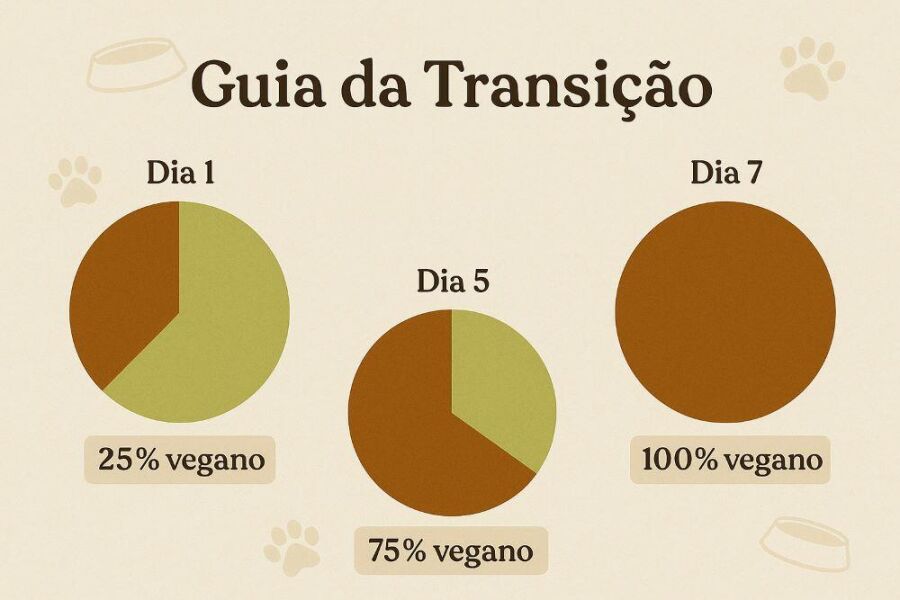
📋 Transition Guide (7-Day Suggestion):
🔹 Days 1-2: 25% new diet + 75% old diet
🔹 Days 3-4: 50% new diet + 50% old diet
🔹 Days 5-6: 75% new diet + 25% old diet
🔹 Day 7: 100% new diet
🛑 Common Problems and Solutions:
Diarrhea : slow down the pace of the transition.
→ Food refusal: try new recipes, adjust flavors (e.g., add nutritional yeast or tahini).
Monitoring : Any sign of persistent discomfort should be evaluated by a veterinarian.
6. Extra Materials Indicated in the Guide
🔸 Books on vegan nutrition for pets
🔸 Expert blog articles
🔸 Educational videos
🔸 Recipe Downloads
🔸 Specific social networks for support and community

With proper guidance and correct supplementation, vegan diets for dogs and cats can be healthy, ethical and sustainable. The transition must be careful and based on quality information and veterinary monitoring.
You might also like to read

What habits would your organs like you to adopt?
Discover simple practices that can help each organ function better.
Published on March 23, 2026 at 12:31 AM - Updated on March 23, 2026 at 12:35 AM - By Silvia Ribeiro
What Defines the Quality of a Protein?
Discover the DIAAS index and see which foods offer the best amino acid profiles and nutritional benefits.
Published on March 17, 2026 at 09:49 AM - Updated on March 17, 2026 at 09:52 AM - By Silvia Ribeiro

Essential Guide to Supplements and Vitamins
A practical guide to the functions, absorption, combinations, and intelligent use of key nutrients.
Published on March 13, 2026 at 18:58 AM - Updated on March 13, 2026 at 18:59 AM - By Silvia Ribeiro

Strategies to Lower Cortisol and Take the Body Out of a State of Alert
Discover how small changes in your diet can reduce stress, improve sleep, and stabilize your energy levels.
Published on March 30, 2026 at 10:45 AM - Updated on March 30, 2026 at 13:16 AM - By Silvia Ribeiro
Ultra-processed foods: What are we really putting on our plates?
Understanding the degree of processing can be more important than counting calories.
Published on March 03, 2026 at 13:05 AM - Updated on March 03, 2026 at 13:08 AM - By Silvia Ribeiro
The Complete Guide to Plant-Based Protein Powders
What to consider when choosing, the main brands on the market, and creative ways to use them in everyday life.
Published on March 23, 2026 at 09:49 AM - Updated on March 23, 2026 at 09:55 AM - By Silvia Ribeiro
The Growth of the Vegan Market in Brazil: Where to Find Products for a Conscious Lifestyle
A guide to finding trustworthy stores, supporting sustainable businesses, and consuming with purpose
Published on March 18, 2025 at 12:32 AM - Updated on March 03, 2026 at 12:45 AM - By Silvia Ribeiro
Omega-3 Without Fish: The Essential Nutrient That Grows in Plants and Comes from the Sea in the Form of Algae
How to ensure you get DHA, EPA, and ALA every day on a 100% plant-based diet without relying on fish.
Published on March 03, 2026 at 10:45 AM - Updated on March 03, 2026 at 10:51 AM - By Silvia Ribeiro
Behind the Labels: How the Industry Hides Ingredients in Cosmetics, Foods, and Medicines
Discover how substances of animal origin are disguised on the market as natural, safe and harmless.
Published on March 22, 2025 at 11:14 AM - Updated on March 29, 2025 at 08:42 AM - By Silvia Ribeiro