


 Back
Science and Studies
Milk, Bones, and Longevity: What Studies Really Show
Decades of research call into question one of the best-known promises of nutrition.

Share:


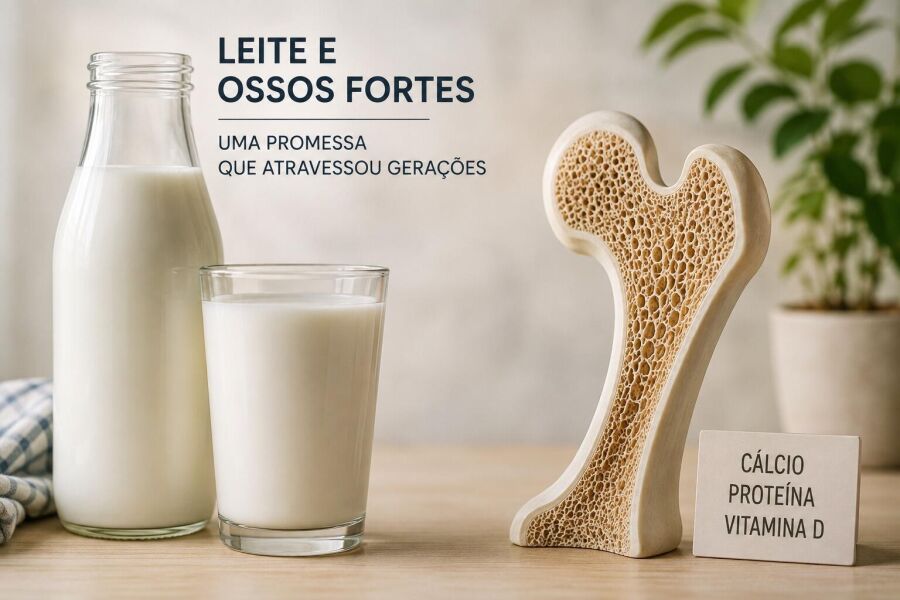
For decades, milk has been presented as one of the main allies of bone health. The justification seemed simple... As an important source of calcium, its consumption would help increase bone mass and, consequently, reduce the risk of osteoporosis and fractures in the future.
However, this relationship began to be questioned when researchers started analyzing milk consumption over long periods. The results raised an uncomfortable question: Does drinking more milk really mean having stronger bones?
Does consuming more milk mean having stronger bones?
Milk contains calcium, phosphorus, and other nutrients important for bone tissue. During childhood and adolescence, a proper diet is essential for achieving good bone mass. The problem arises when this logic is automatically extended into adulthood.
Harvard researchers followed men and women to investigate whether higher milk consumption during adolescence was related to a lower risk of hip fracture later in life. The results did not confirm this expectation. Among men, there was even a borderline association with a higher risk of fracture. In women, higher consumption was not associated with a significant reduction in this risk.
This does not mean that calcium It's irrelevant. He It remains essential for bone health. What the results call into question is the idea that specifically increasing milk consumption is enough to guarantee protection against fractures.
The galactose hypothesis
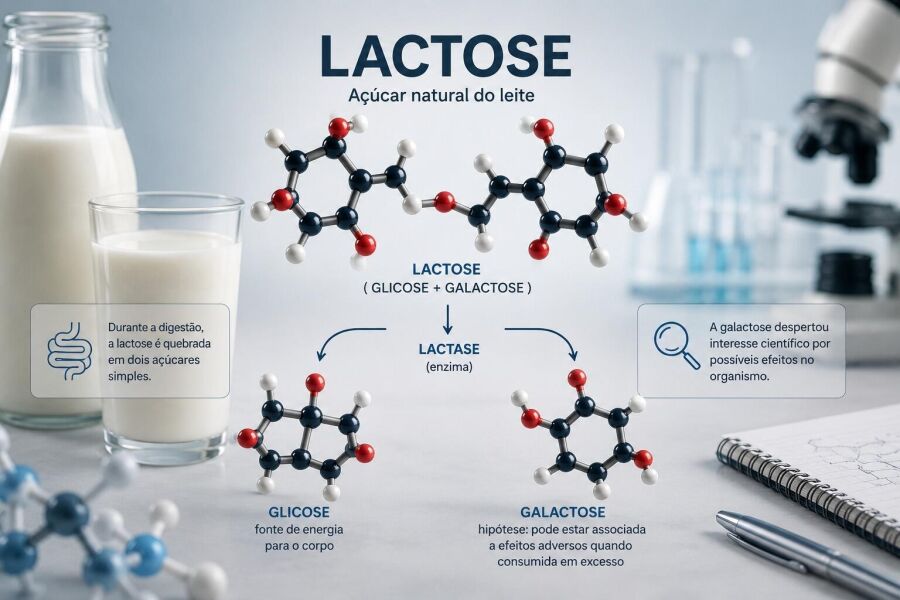
It was in the face of this paradox that a hypothesis emerged that sparked scientific interest. Lactose in milk is formed by glucose and galactose. During digestion, these two sugars are separated and absorbed by the body. Galactose attracted attention because people with galactosemia, a rare genetic condition that impairs its metabolism, can develop various complications, including bone abnormalities.
Furthermore, galactose is used in animal experiments to induce changes associated with aging, such as oxidative stress, inflammation, and degeneration of various organs. This raises a question... If high doses of galactose can produce adverse effects in animals, could habitual exposure to galactose from milk contribute to some of the results observed in humans? It's a biologically plausible hypothesis, but not yet proven.
This distinction is crucial because results obtained in animals cannot be automatically transferred to humans. Some studies acknowledge that their observational results cannot prove that galactose is responsible for the effects found, and the authors argue for the need for experimental research to test this possibility.
The large Swedish study
To investigate the relationship between milk consumption, fractures, and mortality, Swedish researchers followed more than 100 men and women for up to two decades.
Among women , the higher the milk consumption, the greater the observed risk of mortality. Participants who consumed three or more cups per day had almost twice the risk of dying during the follow-up period compared to those who consumed less than one cup. Higher rates of cardiovascular disease, cancer, and fractures were also observed among women who consumed more milk.
The relationship with fractures was particularly noteworthy. Women who drank more milk had a higher risk of hip fracture , the opposite of what would be expected if the food provided strong protection for the bones. Among men, higher consumption was also associated with higher mortality , but the same clear relationship with fractures was not observed.

Milk is not the same as all dairy products.
When researchers analyzed different types of dairy products, they found another interesting finding. The pattern observed for milk was not repeated in the same way with fermented products, such as yogurt and fermented milk. This raised the possibility that the composition of the food plays some role. Fermentation modifies its characteristics and can alter the amount and availability of lactose.
Another possibility involves saturated fat, especially found in whole milk. In an experimental study cited by the researchers, Participants showed higher levels of an inflammation-related marker while consuming unfermented dairy products, compared to periods when they consumed fermented or low-fat products. There is still no definitive answer as to what mechanism could explain these differences.
What happens when milk is replaced?
Harvard researchers analyzed an equally important question: not only what happens when we consume dairy products, but also what occurs when they are replaced by other foods. The results showed that the source chosen for this substitution makes a difference.
Replacing dairy products with meat, chicken, or fish did not show the same benefit observed when the substitution was made with plant-based protein sources. The switch to plant-based foods was associated with a lower risk of mortality. This result reinforces an important principle of nutrition: it is not enough to remove a food from the diet; it is necessary to consider what replaces it.

Can fruits and vegetables make a difference?
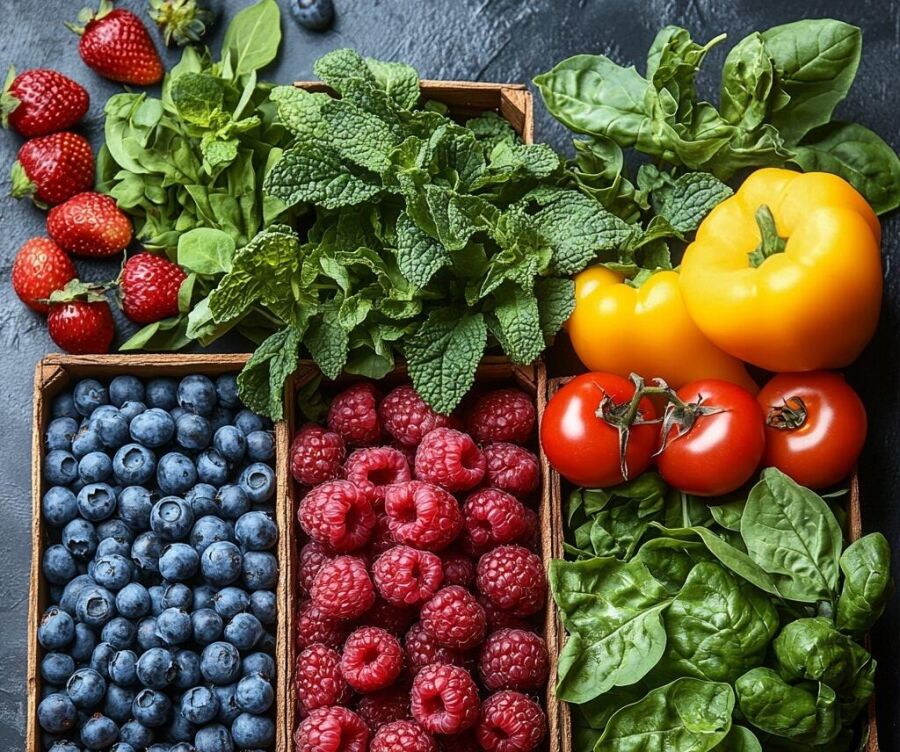
The researchers also raised another possibility. If galactose is related to oxidative stress and inflammation, could a diet rich in antioxidants reduce some of these effects? In animal studies, fruits like blueberries have been shown to mitigate some of the damage caused by galactose.
In human data, women who consumed a lot of milk and also five or more servings of fruits and vegetables per day had lower excess mortality than those with low intake of these foods. However, the risk remained higher than that observed among women who consumed less milk. Furthermore, higher fruit and vegetable intake did not eliminate the increased risk of hip fracture.
And what about recommendations regarding milk?
These results also raise questions about how dietary recommendations are constructed. Organizations dedicated to bone health continue to advocate for the role of dairy products, calcium, and, in certain situations, supplementation. At the same time, researchers point out that some of the literature on dairy products and osteoporosis shows links to the industry.
This does not mean that industry-funded research is automatically wrong. It means that potential conflicts of interest need to be known and considered when evaluating the evidence. In 2019, Canada adopted a different approach when formulating its new dietary guidelines, placing greater emphasis on independent scientific literature and valuing fruits, vegetables, whole grains, and plant-based protein sources.

What can we conclude?
Studies do not allow us to state that milk causes osteoporosis, cancer, or premature death. Nor do they prove that galactose is responsible for the observed results. What they do show is that the relationship between milk, bones, and longevity is much more complex than the old idea that drinking more milk necessarily means having stronger bones . Calcium remains important , but bone health depends on several factors, including vitamin D, adequate protein, physical activity, muscle mass, hormonal status, and overall diet quality.
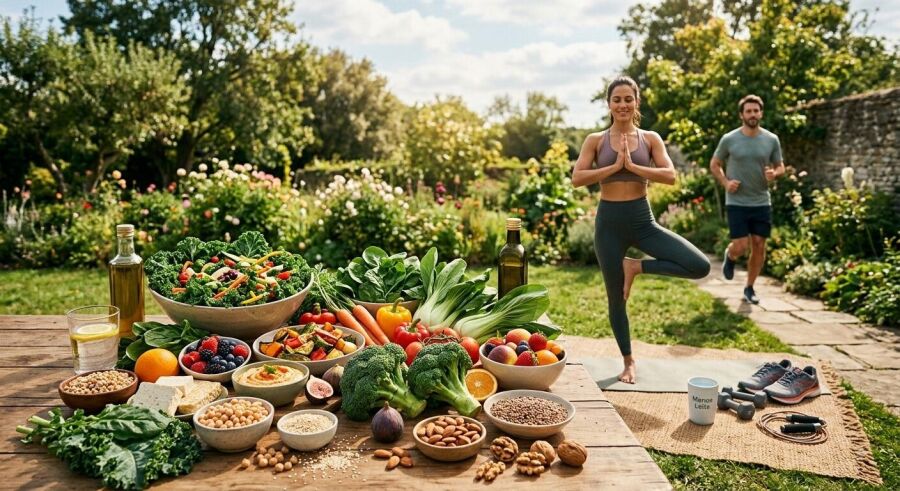
Perhaps the main lesson is precisely this. Instead of looking for one essential food to protect bones, it makes more sense to look at the diet as a whole. A varied diet, rich in fruits, vegetables, legumes, whole grains, seeds, nuts, and other plant-based sources of nutrients can offer a much broader strategy for health.
Science still needs to clarify exactly what role milk, galactose, saturated fat, and fermentation play in this equation. Until then, the best approach is to carefully evaluate the evidence, without turning milk into a villain, but also without treating its former reputation as absolute truth.
Sources:
Watch: https://nutritionfacts.org/video/flashback-friday-is-milk-good-for-our-bones/
All scientific articles mentioned are available in the video description. To access them, use the "Sources Cited" tab when browsing on a computer or the "Sources" tab on the mobile version.
🏠 Open Home to see all subjects and topics
You might also like to read

How to Lower LDL Cholesterol Naturally with Food, Herbs, and Spices
Learn how to combine foods to improve your cholesterol profile naturally and based on evidence.
Published on March 20, 2026 at 12:07 AM - Updated on March 20, 2026 at 12:08 AM - By Silvia Ribeiro

Does What We Put on Our Plate Affect Our Minds?
The new science that reveals the connection between nutrition, emotional balance, and mental health.
Published on March 21, 2026 at 10:48 AM - Updated on March 21, 2026 at 10:50 AM - By Silvia Ribeiro

High Cholesterol: Dietary Strategies to Lower LDL
How diet can be your main ally in lowering bad cholesterol and protecting your heart naturally.
Published on March 18, 2026 at 11:38 AM - Updated on March 18, 2026 at 12:34 AM - By Silvia Ribeiro

How Not to Die: What We Put on Our Plate Is Deciding How Long We Will Live
Science shows how daily diet directly influences the diseases that kill the most people in the world, and how changing this is within our reach.
Published on March 26, 2026 at 10:12 AM - Updated on March 26, 2026 at 16:17 AM - By Silvia Ribeiro

Why Eating More Fiber May Be the Most Effective Tip for Weight Loss
How fiber-rich foods regulate appetite, improve metabolism, and create an environment conducive to weight loss.
Published on March 21, 2026 at 11:17 AM - Updated on March 21, 2026 at 11:19 AM - By Silvia Ribeiro

Glycotoxins (AGEs): The Invisible Toxins that Accelerate Aging and Make the Body Sick
How do these compounds form in the body and in food, and what is their real impact on long-term health?
Published on March 30, 2025 at 10:23 AM - Updated on March 30, 2025 at 10:25 AM - By Silvia Ribeiro

Creatine: How to Use It to Strengthen Muscles as We Age
The role of creatine in maintaining lean mass and preventing strength loss during aging.
Published on March 26, 2025 at 09:44 AM - Updated on March 26, 2025 at 09:47 AM - By Silvia Ribeiro

How to Reduce Wrinkles Naturally: The Role of Diet Proven by Science
Research shows that certain nutrients can smooth wrinkles and stimulate rejuvenation.
Published on March 19, 2025 at 09:15 AM - Updated on March 19, 2025 at 09:18 AM - By Silvia Ribeiro

TMAO: The Gut Metabolite Linking Red Meat to Cardiovascular Disease
The science behind the compound that links diet to heart risk and how plant-based diets can counteract its effects.
Published on March 03, 2025 at 11:39 AM - Updated on March 03, 2025 at 11:41 AM - By Silvia Ribeiro